Char Dham Yatra
The four sacred abodes of Vishnu, spanning the four corners of India
🪔 The yatra
Why pilgrims walk this route
Adi Shankaracharya in the 8th century identified four temples — one in each cardinal direction of Bharat — as the abodes (dhāms) of Vishnu. Completing all four is believed to grant moksha. The route stitches the country together as a single spiritual geography: Badrinath in the Himalayas, Dwarka on the Arabian Sea, Puri on the Bay of Bengal, and Rameswaram at the southern tip.
Historical context
The Char Dham was institutionalised as a unified pilgrimage by Adi Shankaracharya, who established mathas (monastic centres) at each site. Before air travel, completing the yatra took 6-12 months on foot or by bullock cart — a transformative life undertaking. Today the same circuit can be done in 12-15 days by combining trains, flights, and road transport.
The route
4-stop yatra · Badrinath (North) or Puri (East) → Whichever dhām is travelled to last; many end at Rameswaram before returning home
- Stop1
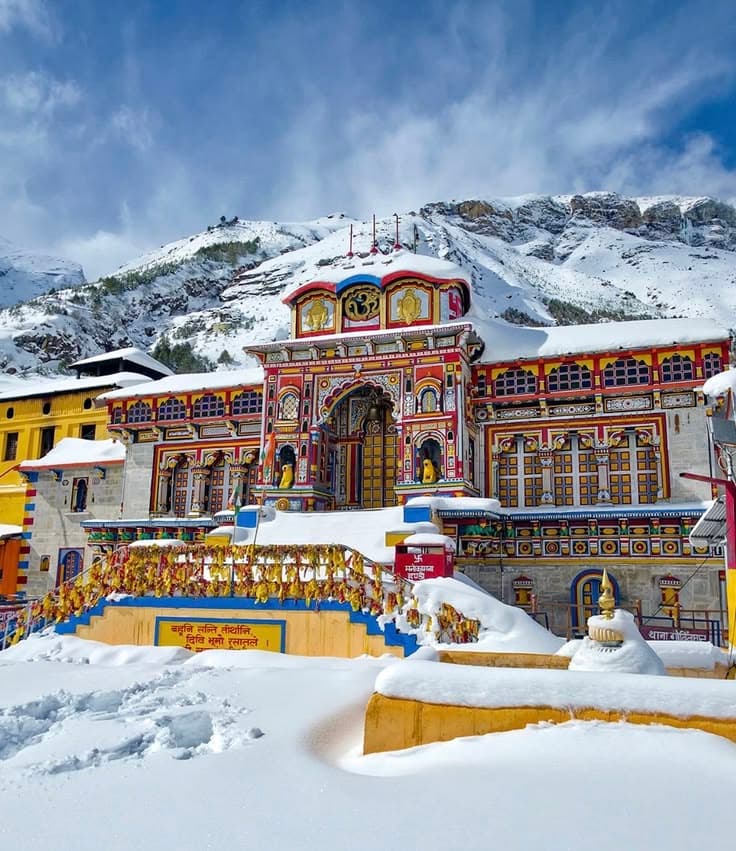
Badrinath
· Uttarakhand⏱️ 2 daysThe northern dhām. The temple sits at 3,133 m beside the Alaknanda river, sealed under snow from November to April. Vishnu meditates here as Badri-Narayan amid the Nar-Narayan peaks.
- •Open only from late April / early May to mid-November
- •Acclimatise in Joshimath or Auli for one night before ascending
- •Combine with Mana Village — India's last village before the Tibet border
- Stop2
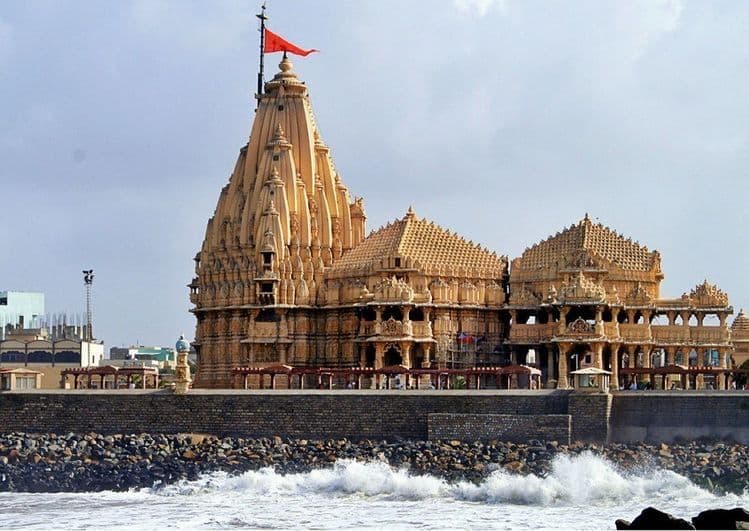
Dwarka
· Gujarat⏱️ 2 daysThe western dhām on the Arabian Sea. Krishna's mythical capital, said to have been submerged after his departure. The Dwarkadhish temple's 78-m shikhara is visible from far out at sea.
- •Take the morning ferry to Bet Dwarka — Krishna's residential island
- •Nageshwar Jyotirlinga lies 17 km away and pairs naturally with this stop
- •Avoid May-June (44°C) and the monsoon's choppy seas in July-August
- Stop3
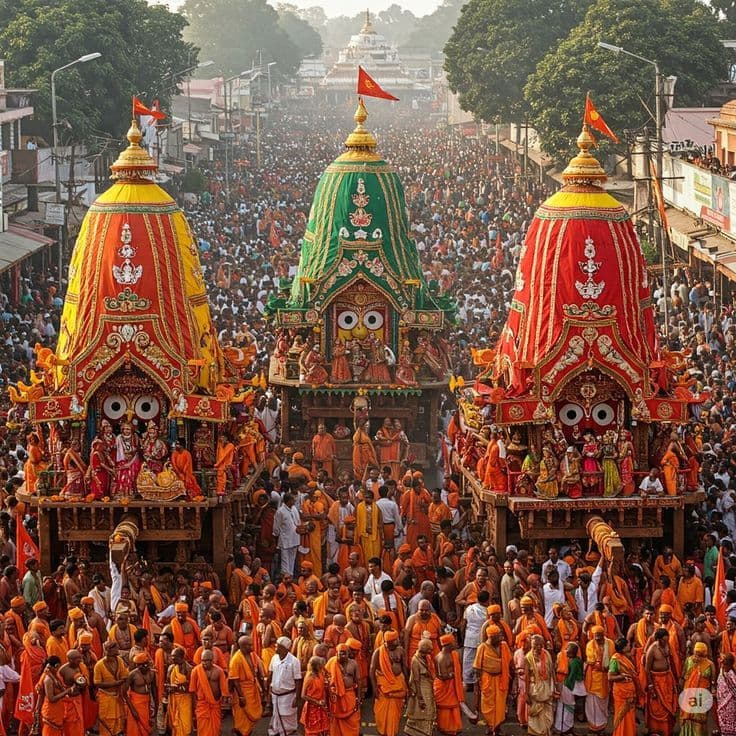
Puri (Jagannath)
· Odisha⏱️ 2 daysThe eastern dhām. Jagannath, his brother Balabhadra and sister Subhadra are worshipped here as wooden idols replaced every 12 years in the Nabakalebara ceremony. The Rath Yatra in June-July draws over a million pilgrims.
- •Non-Hindus are not permitted inside the inner sanctum — view from Raghunandan Library rooftop
- •The Mahaprasad (temple meal) feeds tens of thousands daily and is considered immune to ritual pollution — caste and jhutha rules do not apply once it has been offered
- •Konark Sun Temple (35 km) is the natural day-trip pairing
- Stop4
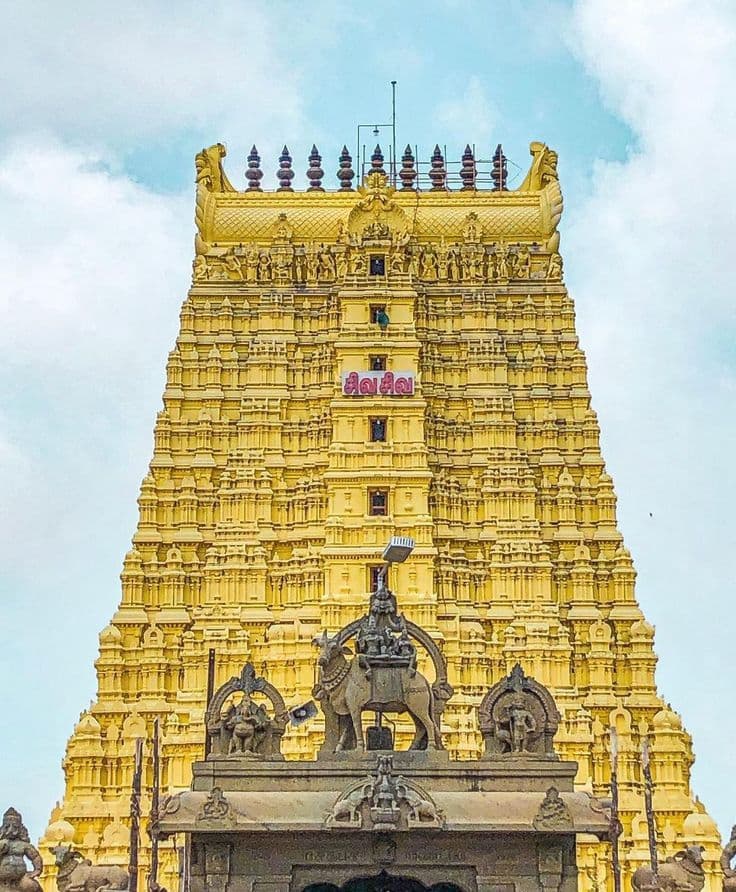
Rameswaram
· Tamil Nadu⏱️ 2 daysThe southern dhām. Where Rama installed a Shivalinga before crossing to Lanka — making this both a Vishnu dhām and a Shiva Jyotirlinga. The temple's 1,212-pillar corridor is the longest temple corridor in India.
- •Bathe in 22 sacred theerthams (wells) inside the temple — the order matters; ask the priest
- •Dhanushkodi (the ghost town at the island's tip) is an unmissable side trip
- •Madurai's Meenakshi Temple is a 4-hour drive and combines beautifully
Travel tips
Practical guidance
- 1Book Badrinath darshan slots online at badrinath-kedarnath.gov.in 30+ days ahead during peak May-June
- 2The total flight cost dominates the budget — clockwise (Delhi → Dehradun → Ahmedabad → Bhubaneswar → Madurai → Chennai) keeps it under ₹25,000
- 3Carry a small kit of pre-blessed items (rudraksha, haldi-kumkum) — many pilgrims add a strand of thread or piece of cloth at each dhām
- 4Most circuit operators wrap all four into a 12-day package for ₹35,000-60,000 per person; DIY-ing saves about 20% but adds ~2 days of logistics
Rituals & traditions
What pilgrims observe
- 🪷Sankalpa (intention) declared at the first dhām, completed at the last
- 🪷A single set of sacred clothing carried through all four for the temple visits
- 🪷Consuming nothing onion/garlic during the yatra is traditional but not required
Prerequisites
Before you start
- ✓Government photo ID for all sites; foreign passport-holders need to verify Puri sanctum rules in advance
- ✓Reasonable mobility — Badrinath alone has 30+ steps; Rameswaram's 22-theertham bathing takes 90 minutes on foot
- ✓Travel insurance covering Himalayan altitude (Badrinath sits at 3,133 m)
Other yatras
More pilgrimage circuits
Begin your yatra
Plan Char Dham Yatra day by day
Generate a personalised itinerary in seconds — including transport between stops, suggested stays and a budget estimate. Or open BharatDost (chat icon) for stop-specific questions.