
Ashtadasha Shakti Peetha
The eighteen Maha Shakti Peethas hymned by Adi Shankaracharya
🪔 The yatra
Why pilgrims walk this route
Hindu tradition counts Shakti Peethas in several layers: 108 in the Devi Bhagavata Purana, 51 (the most popular figure, sometimes 52 with Vaishno Devi added), four Adi Peethas (Bimala, Tara Tarini, Kamakhya, Kalighat), and the canonical eighteen — the Ashtadasha Maha Shakti Peethas — enumerated by Adi Shankaracharya in the Ashtadasa Shakti Peetha Stotram. Visiting all eighteen is the highest yatra in the Shakta tradition. The circuit spans Sri Lanka, Pakistan-occupied Kashmir and ten Indian states.
Historical context
The eighteen-peetha list comes from Adi Shankaracharya's Ashtadasa Shakti Peetha Stotram (8th century CE), which fixes the canonical order from Shankari Devi in Sri Lanka to Saraswati in Sharda Peeth, Kashmir. Two of the eighteen sit outside present-day India: Shankari Devi at Trincomalee (Sri Lanka — the original temple was destroyed by Portuguese cannon in 1622, only the foundation survives) and Saraswati at Sharda Peeth in Pakistan-occupied Kashmir (closed to Indian pilgrims since 1947). The remaining sixteen are scattered across the country — Tamil Nadu, Telangana, Andhra Pradesh, Karnataka, Maharashtra, Madhya Pradesh, Odisha, Assam, Uttar Pradesh, Bihar, Jammu & Kashmir, Himachal Pradesh and West Bengal. Modern pilgrim packages typically cover the sixteen accessible peethas in 21-28 days, organised as five regional sub-circuits.
The route
18-stop yatra · Trincomalee, Sri Lanka (canonical) or Chennai (practical Indian start) → Sharda Peeth, Kashmir (canonical, inaccessible) or Vaishno Devi (Katra) for most pilgrims
- Stop1
Shankari Devi
· Trincomalee, Sri Lanka⏱️ 1 dayThe first peetha in the stotram — 'Lankayam Shankari devi'. Where Sati's groin or thigh fell. The original Koneswaram temple complex on Swami Rock was destroyed by Portuguese cannon in 1622; only foundations and a modern marker remain. Most pilgrims pay obeisance from the cliff edge.
- •Reachable via flight to Colombo, then road to Trincomalee (260 km)
- •Pair with Koneswaram Shiva temple, also rebuilt on the same cliff
- Stop2
Kamakshi
· Tamil Nadu⏱️ 1 day'Kamakshi Kanchikapure' — at Kanchipuram, where Sati's back / spine is said to have fallen. The 6th-century Pallava-era temple is one of three Shakti Peethas considered as Adi Shankara's three centres of Sri Vidya worship (with Madurai and Varanasi).
Open full guide for Kamakshi → - Stop3
Sri Shrinkhala
· West Bengal⏱️ 1 day'Pradyumne Shrinkhala devi' — Sati's stomach / abdomen. The original location is debated; most lists place it at Pandua (Hooghly district, West Bengal), where only ruins remain. Some traditions identify it with a temple in Bangladesh.
- •Site is largely a ruin — visit Hangseshwari Temple at Bansberia (12 km) which preserves the local Devi tradition
- Stop4
Chamundeshwari
· Karnataka⏱️ 1 day'Chamundi Krounchapattane' — atop the Chamundi Hills overlooking Mysore, where Sati's hair fell. The 12th-century Hoysala-era temple is the kuladevata of the Wadiyar royal family of Mysore.
Open full guide for Chamundeshwari → - Stop5
Jogulamba
· Telangana⏱️ 1 day'Alampure Jogulamba' — at Alampur on the Tungabhadra, where Sati's upper teeth fell. Rebuilt in 2005 after centuries of disuse; sits inside the Navabrahma temple complex of nine 7th-century Chalukyan Shiva shrines.
Open full guide for Jogulamba → - Stop6
Bhramaramba
· Andhra Pradesh⏱️ 1 day'Sri Shaile Bhramarambika' — at Srisailam, where Sati's neck (some traditions say upper lip) fell. Shares its complex with the Mallikarjuna Jyotirlinga — one of only two sites that are simultaneously Jyotirlinga and Shakti Peetha.
Open full guide for Bhramaramba → - Stop7
Mahalakshmi
· Maharashtra⏱️ 1 day'Kolhapure Mahalakshmi' — at Kolhapur, where Sati's three eyes fell. The 7th-century Chalukyan temple's main idol is a 1.2-m black stone Devi adorned with gold; the temple's annual Kirnotsav (sun-ray festival) sees the setting sun illuminate the deity through the entrance for three days each January and November.
Open full guide for Mahalakshmi → - Stop8
Ekaveerika (Renuka)
· Maharashtra⏱️ 1 day'Mahurye Ekaveerika' — at Mahur, where Sati's right hand fell. The temple is set on a hilltop in the Sahyadri foothills; the goddess is identified with Renuka, mother of Parashurama. One of the three-and-a-half (Sade Teen) Shakti Peethas of Maharashtra.
Open full guide for Ekaveerika (Renuka) → - Stop9
Mahakali (Harsiddhi)
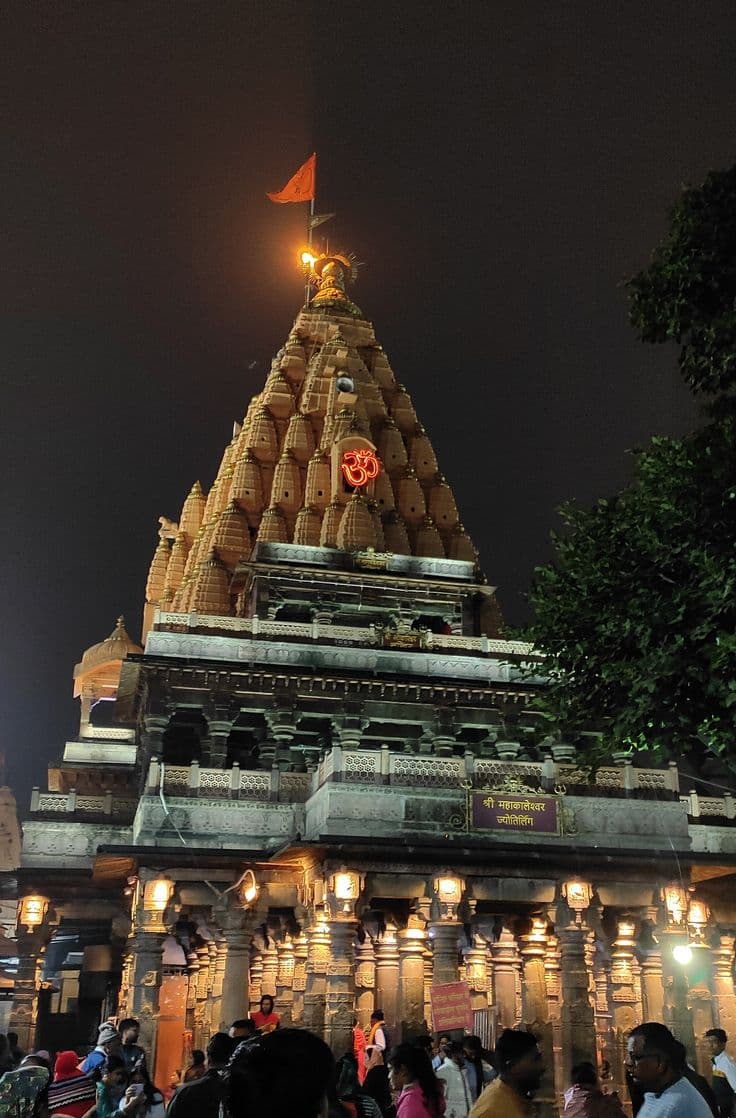
· Madhya Pradesh⏱️ 1 day'Ujjainyam Mahakali' — at the Harsiddhi temple in Ujjain, where Sati's elbow fell. Walking distance from the Mahakaleshwar Jyotirlinga; pair the two for a single Ujjain visit.
Open full guide for Mahakali (Harsiddhi) → - Stop10
Puruhutika
· Andhra Pradesh⏱️ 1 day'Pithikayam Puruhutika' — at Pithapuram in East Godavari district, where Sati's left hand fell. Adjacent to the Kukkuteswara Swamy Shiva temple; both share a sacred tank, the Pada Gaya Sarovar, where ancestral pinda offerings are made.
Open full guide for Puruhutika → - Stop11
Girija (Biraja)
· Odisha⏱️ 1 day'Odyane Girijadevi' — at Jajpur on the Vaitarani river, where Sati's navel fell. The 13th-century temple is one of the four Adi Shakti Peethas; pilgrims also perform shraddha rites at the adjoining Vaitarani ghat, considered as sacred as Gaya for ancestral rituals.
Open full guide for Girija (Biraja) → - Stop12
Manikyamba
· Andhra Pradesh⏱️ 1 day'Manikye Daksha vatika' — at Draksharamam, where Sati's left cheek fell. Shares its complex with the Bhimeswara Swamy temple, one of the Pancharama Kshetras; the 9th-century Eastern Chalukyan structure is among the oldest in coastal Andhra.
Open full guide for Manikyamba → - Stop13
Kamarupa (Kamakhya)
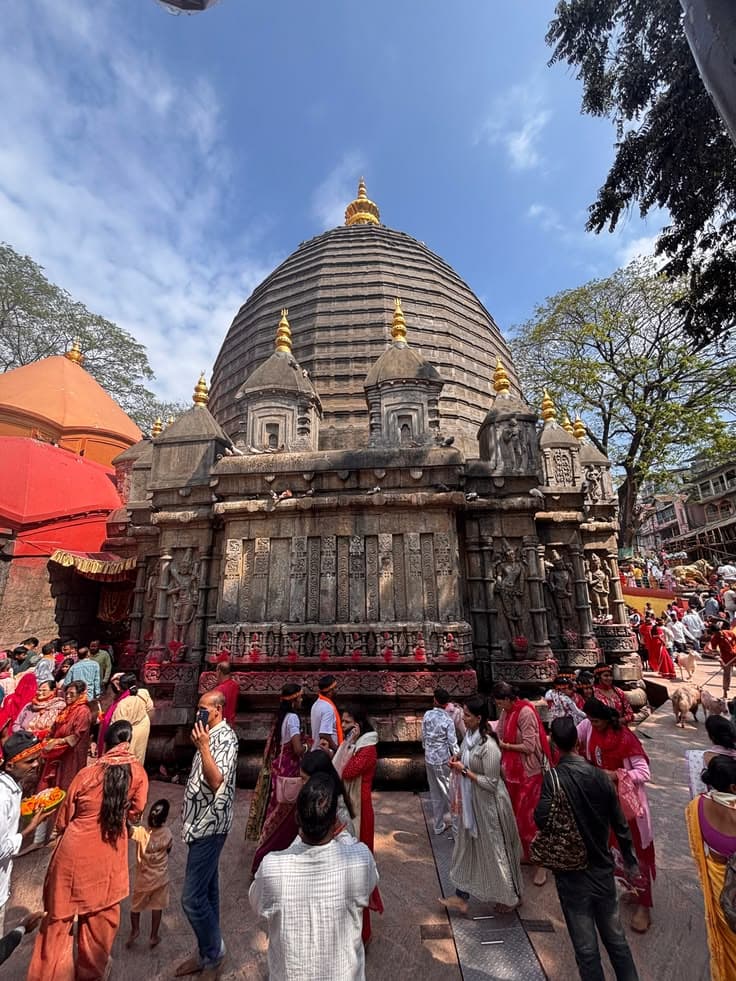
· Assam⏱️ 2 days'Haripeethe Kamarupa' — at Guwahati, where Sati's yoni fell. The most powerful Shakti Peetha in tantric tradition. The Ambubachi Mela in June celebrates the goddess's annual menstruation — the temple is sealed for three days, then ritually reopened.
Open full guide for Kamarupa (Kamakhya) → - Stop14
Madhaveshwari (Alopi Devi)
· Uttar Pradesh⏱️ 1 day'Prayage Madhaveshwari' — at Prayagraj near the Triveni Sangam, where Sati's wrist fingers fell. The shrine is unique — a wooden palanquin (doli) is worshipped instead of an idol, recalling the legend that the goddess vanished into thin air leaving only her doli behind.
- •Combine with the Triveni Sangam, Akshayavat, and the Maha Kumbh (next at Prayagraj in 2037)
- Stop15
Vaishnavi
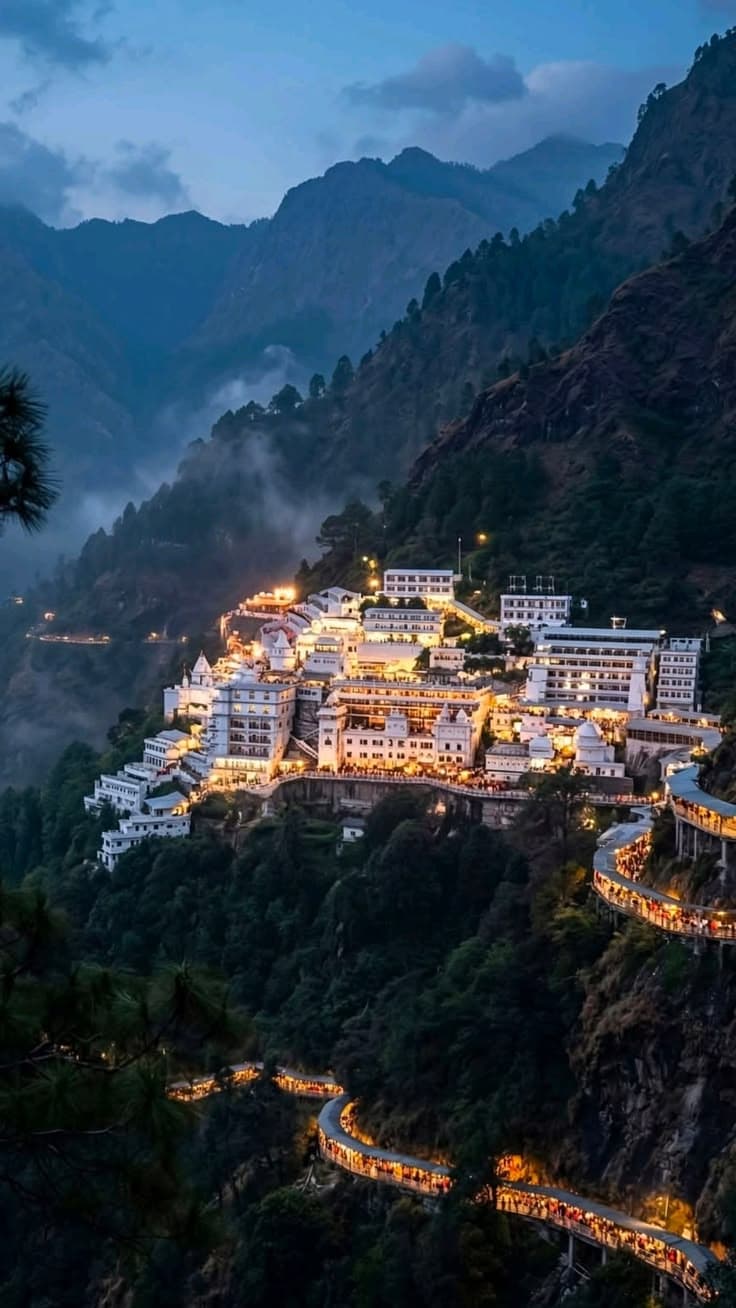
· Jammu and Kashmir⏱️ 2 days'Jvalayam Vaishnavi devi' — popularly identified with Vaishno Devi at Katra (some interpretations of the stotram place this at Jwalamukhi or Kanyakumari). The 13-km uphill yatra to the holy cave at 1,584 m is one of the most attended pilgrimages in India.
Open full guide for Vaishnavi → - Stop16
Mangalagauri
· Bihar⏱️ 1 day'Gayayam Mangalagauri' — atop Mangalagauri Hill in Gaya, where Sati's breast fell. Pilgrims combine the visit with the Vishnupada temple and the ancestral pinda-daan at the Phalgu river — Gaya's signature pitru-paksha rite.
Open full guide for Mangalagauri → - Stop17
Vishalakshi
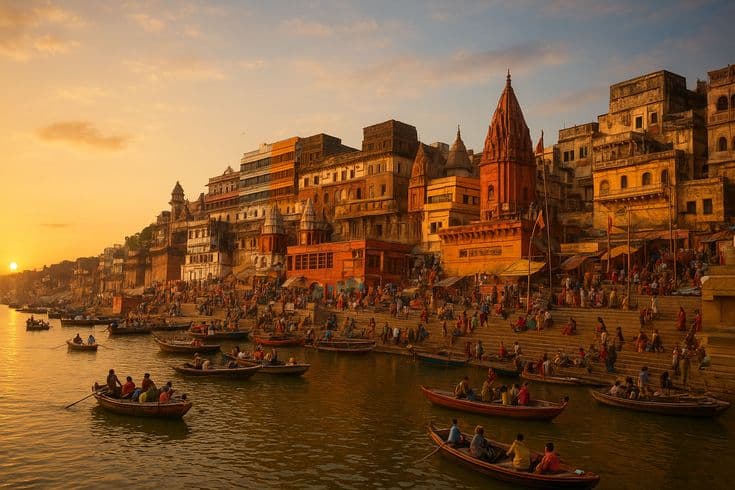
· Uttar Pradesh⏱️ 1 day'Varanasyam Vishalakshi' — at Mir Ghat in Varanasi, where Sati's earring fell (some traditions say her face). The temple is small and tucked between bhang shops in the lanes, a few hundred metres from Manikarnika Ghat.
Open full guide for Vishalakshi → - Stop18
Saraswati (Sharda Peeth)
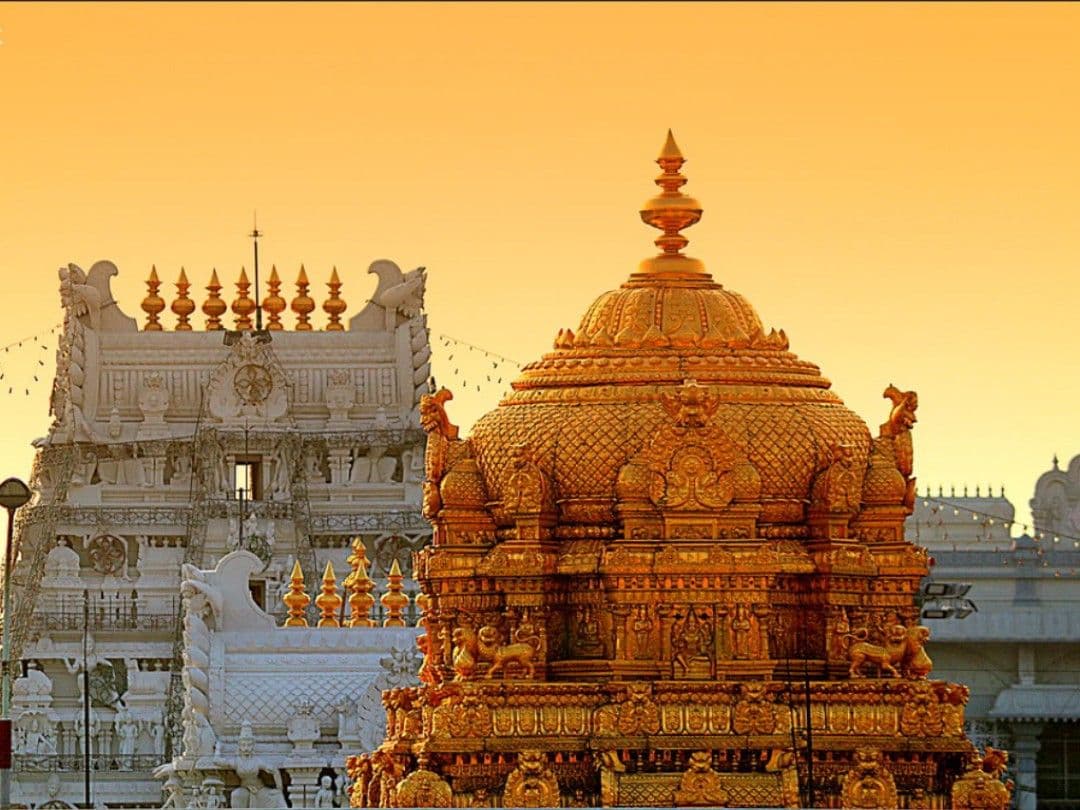
· Pakistan-occupied Kashmir⏱️ 1 day'Kashmire tu Saraswati' — at Sharda Peeth on the Neelum river, where Sati's right hand fell. One of the great learning centres of ancient India alongside Nalanda; the temple is now in PoK and inaccessible to Indian pilgrims since 1947. Pilgrims symbolically complete the yatra by visiting the Sharda mandap at Tirupati or the modern Sharada temple at Sringeri (Karnataka).
- •Inaccessible to Indian pilgrims; symbolic substitute is Sringeri Sharadamba (Karnataka)









Travel tips
Practical guidance
- 1Navaratri (Sharad in late September-October, Chaitra in March-April) is peak; Vaishno Devi yatra registration windows fill within minutes during these nine days
- 2Vaishno Devi's online yatra parchi (registration) is mandatory and can be booked at maavaishnodevi.org 30 days ahead
- 3Five practical sub-circuits manage the geography: South (Kanchipuram-Mysore-Kolhapur), Deccan (Alampur-Srisailam-Pithapuram-Draksharamam), Central (Mahur-Ujjain), East (Jajpur-Kamakhya-Pandua-Gaya), North (Prayagraj-Varanasi-Vaishno Devi). Each takes 5-7 days
- 4Most pilgrims skip Shankari Devi (Sri Lanka) and Saraswati (PoK) for a 16-stop accessible-only circuit; some operators wrap that in a 21-day Bharat Gaurav rail package from ₹65,000 per person
- 5The four Adi Shakti Peethas (Bimala, Tara Tarini, Kamakhya, Kalighat) are NOT all part of the Ashtadasha — only Kamakhya overlaps. Pilgrims who want both lists should plan an extended yatra
Rituals & traditions
What pilgrims observe
- 🪷Kanya Pujan during Navaratri — feeding nine unmarried girls representing the goddess's nine forms
- 🪷108-bead japa of the Lalita Sahasranama or Devi Mahatmya at each peetha
- 🪷Pinda-daan at Gaya (Mangalagauri) for ancestral release — pairs with the regular Gaya shraddha rite
- 🪷Tantric pujas at Kamakhya are open to lay pilgrims — book a sankalpa through the temple trust
Prerequisites
Before you start
- ✓Vaishno Devi yatra parchi (free) is mandatory — collect at Katra or pre-book online
- ✓Modest dress code — saree, salwar-kameez or dhoti-kurta preferred at major peethas
- ✓Reasonable fitness for the 13-km Vaishno Devi climb (ponies and palki available; helicopter to Sanjichhat skips the bottom 9 km)
- ✓Sri Lanka leg requires a 30-day visa-on-arrival or e-visa for Indian passport holders; budget USD 50 plus return flight
Other yatras
More pilgrimage circuits
Begin your yatra
Plan Ashtadasha Shakti Peetha day by day
Generate a personalised itinerary in seconds — including transport between stops, suggested stays and a budget estimate. Or open BharatDost (chat icon) for stop-specific questions.