Buddhist Heritage Circuit
Where the Buddha lived, taught, and attained Nirvana
🪔 The yatra
Why pilgrims walk this route
Sites across northern and central India that mark the major events in the Buddha's life — enlightenment, first sermon, parinirvana, and key monastic retreats — plus the ancient university of Nalanda and the Great Stupa at Sanchi. The circuit draws pilgrims from Japan, Sri Lanka, Thailand, Korea and the Tibetan diaspora year-round.
Historical context
The Buddha (traditionally dated c. 563-483 BCE) was born at Lumbini (Nepal), attained enlightenment at Bodhgaya, gave his first sermon at Sarnath, and entered parinirvana at Kushinagar. Emperor Ashoka in the 3rd century BCE marked the major sites with stone pillars; the surviving pillars at Lumbini and Sarnath are among the most important early-historic Indian inscriptions. Nalanda grew up afterwards (5th-12th century CE) as the Buddhist intellectual centre of the ancient world.
The route
7-stop yatra · Bodhgaya (most pilgrims fly into Gaya or Patna) → Sravasti / Kushinagar, return via Lucknow or Gorakhpur
- Stop1
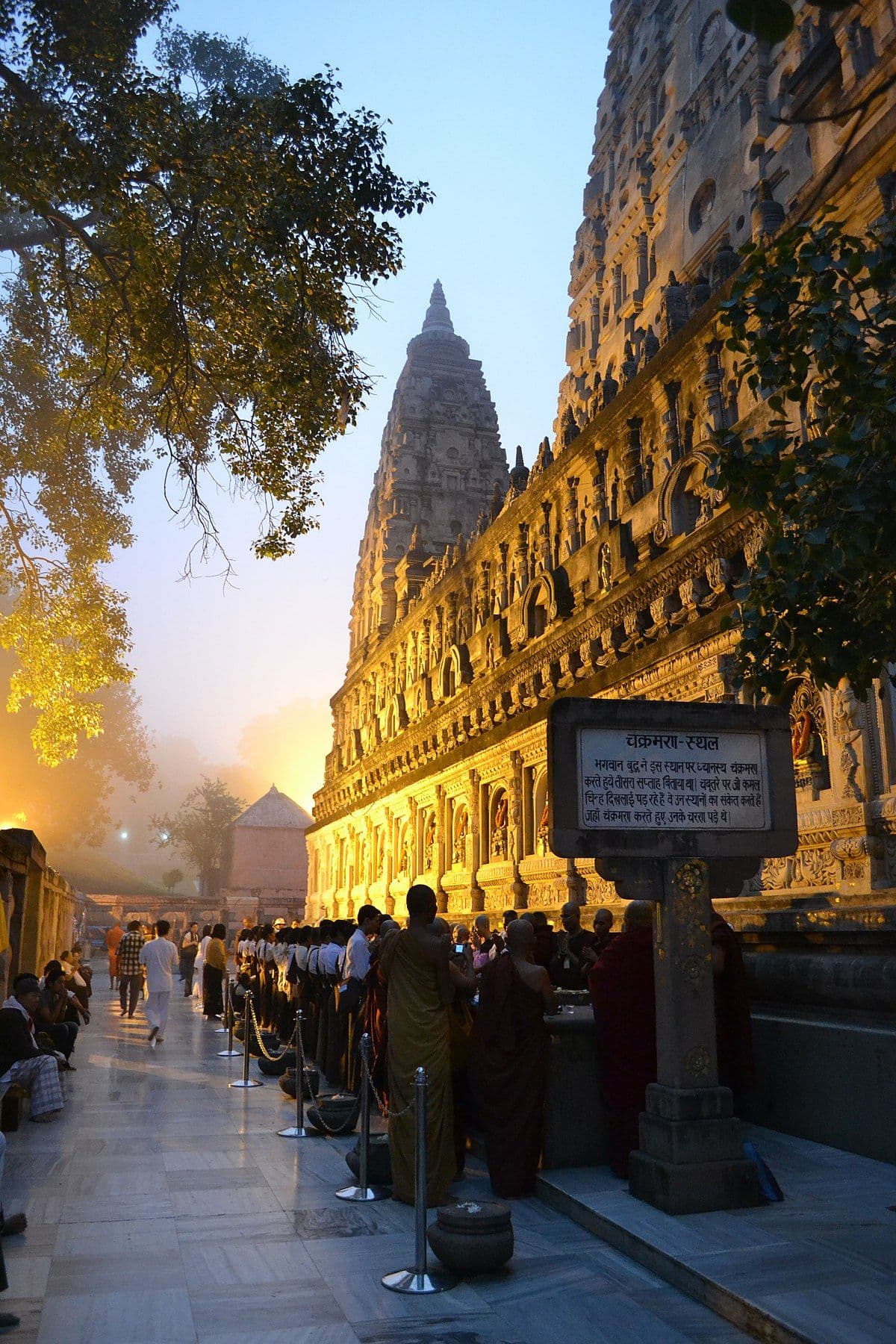
Bodhgaya
· Bihar⏱️ 3 daysWhere Siddhartha attained enlightenment under the Bodhi tree. The Mahabodhi temple is a UNESCO site and the holiest place in Buddhism. The current Bodhi tree is a direct sapling-descendant of the original.
Open full guide for Bodhgaya → - Stop2
Sarnath
· Uttar Pradesh⏱️ 1 dayWhere the Buddha gave his first sermon (Dhammacakkappavattana Sutta) to the five ascetics. The Dhamek Stupa here marks the exact spot. 10 km from Varanasi.
Open full guide for Sarnath → - Stop3
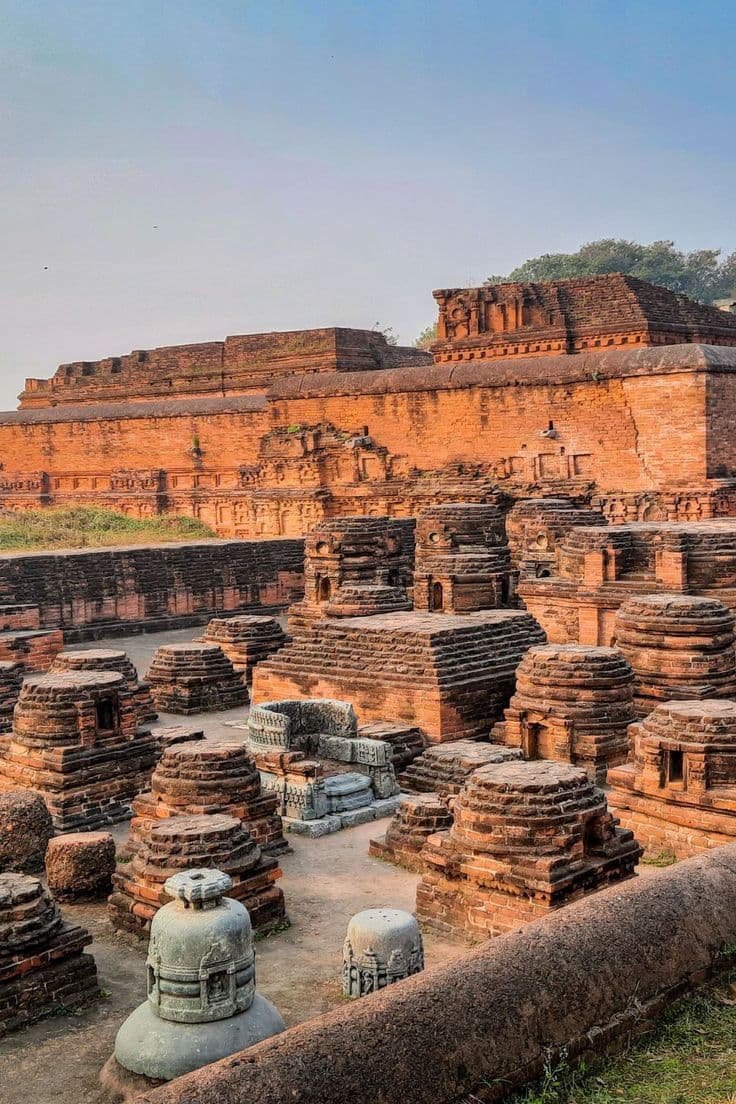
Nalanda
· Bihar⏱️ 1 dayOne of the world's earliest residential universities (5th-12th century CE). Hosted up to 10,000 students from across Asia, including Xuanzang. The ruins span 14 hectares; the new Nalanda University reopened nearby in 2014.
Open full guide for Nalanda → - Stop4
Rajgir
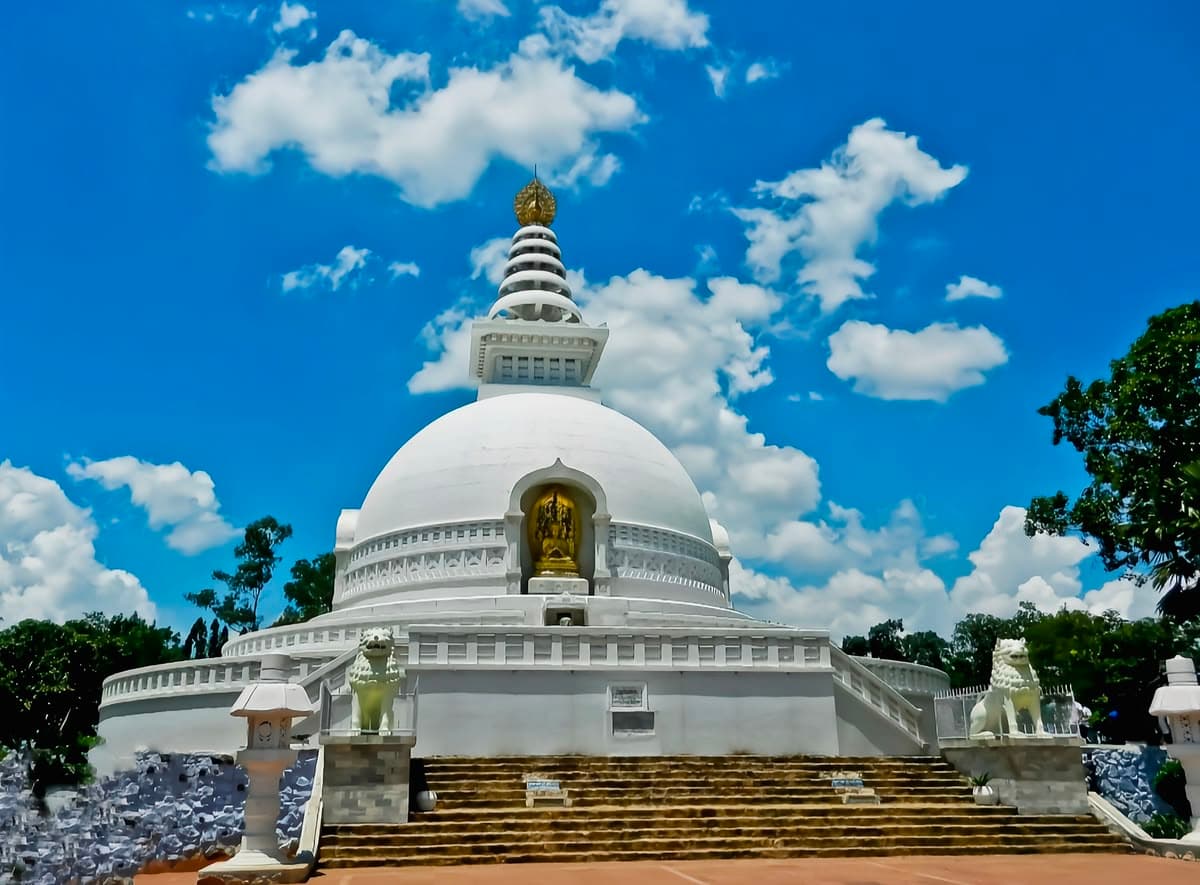
· Bihar⏱️ 2 daysCapital of the ancient Magadha kingdom, where the Buddha spent five monsoon retreats. Vulture's Peak (Gridhrakuta) is where he delivered the Lotus Sutra. The Vishwa Shanti Stupa is reached by ropeway.
Open full guide for Rajgir → - Stop5
Kushinagar
· Uttar Pradesh⏱️ 1 dayWhere the Buddha entered parinirvana under the twin sal trees. The reclining Buddha statue at the Mahaparinirvana temple is 6 m long, dating from the 5th century CE.
Open full guide for Kushinagar → - Stop6
Sravasti
· Uttar Pradesh⏱️ 1 dayWhere the Buddha spent 24 monsoon retreats and performed the Twin Miracle. Jetavana monastery's foundations are still visible.
Open full guide for Sravasti → - Stop7
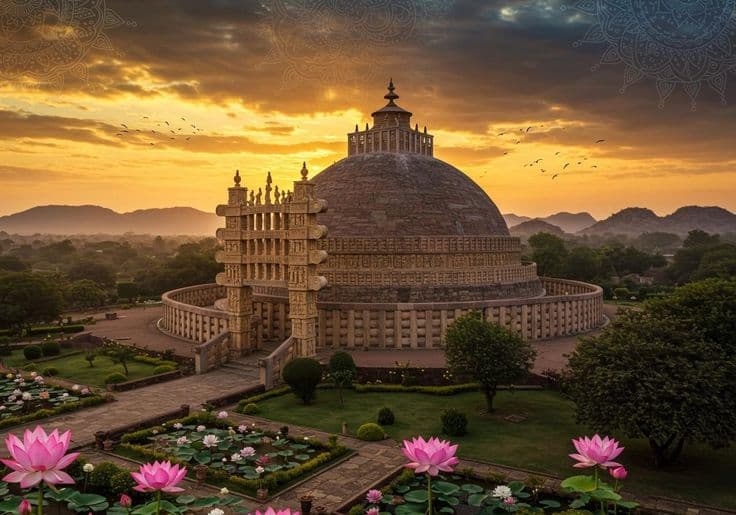
Sanchi
· Madhya Pradesh⏱️ 1 dayOptional Western extension. The Great Stupa, originally commissioned by Emperor Ashoka, is among the oldest stone monuments in India; the adjacent Stupa 3 once held relics of Sariputta and Mahamoggallana, the Buddha's two chief disciples.
- •Adds 2-3 days of travel; most pilgrims skip it on a first visit and combine with a separate Madhya Pradesh trip



Travel tips
Practical guidance
- 1Bodhgaya has direct international flights from Bangkok, Yangon, Singapore and Colombo during peak season (November-February)
- 2The Indian Railways' Mahaparinirvana Express runs the entire circuit as an 8-day train tour from ₹85,000 per person
- 3Most Asian Buddhist nations have built their own monasteries at Bodhgaya — staying at the Thai, Japanese, Burmese or Bhutanese monastery is an experience in itself, ₹500-1,500/night
- 4Avoid March-September — Bihar/UP plains hit 42°C+ and humidity makes meditation outdoors impossible
Rituals & traditions
What pilgrims observe
- 🪷Three pradakshinas (clockwise circumambulations) of the Mahabodhi tree
- 🪷Lighting butter lamps at Vulture's Peak (Rajgir)
- 🪷Reading the Lotus Sutra at Gridhrakuta is the practice of many East Asian pilgrims
Prerequisites
Before you start
- ✓No special permits — all sites are open to all faiths
- ✓Lightweight cotton clothing covering shoulders and knees for monastery visits
- ✓Cash for monastery donations — many monasteries don't accept UPI or cards
Other yatras
More pilgrimage circuits
Begin your yatra
Plan Buddhist Heritage Circuit day by day
Generate a personalised itinerary in seconds — including transport between stops, suggested stays and a budget estimate. Or open BharatDost (chat icon) for stop-specific questions.