

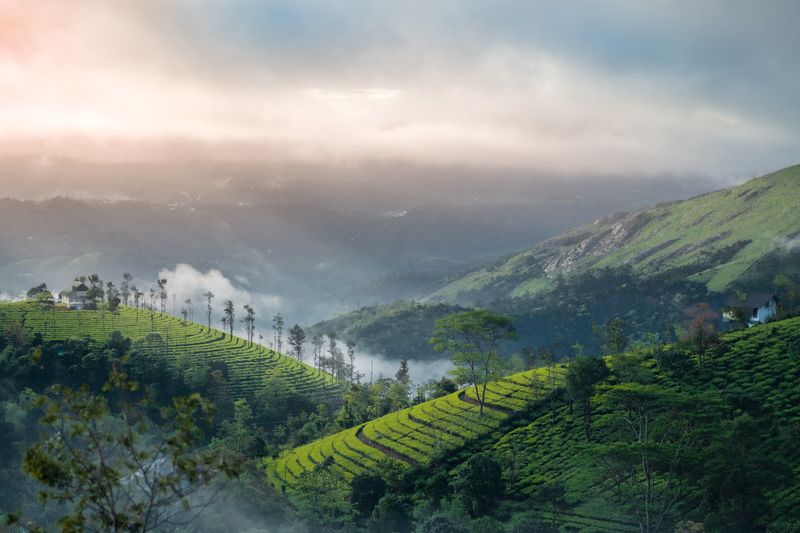


How a Nepali hillside became the tea capital of the world
Until 1835, Darjeeling was an uninhabited ridge of rhododendron forest. The East India Company leased it from the Chogyal of Sikkim as a sanatorium for British soldiers. Dr. Archibald Campbell, the civil surgeon, smuggled Chinese tea seeds from Kumaon and planted the first experimental bushes in 1841. By 1866, there were 39 tea gardens; by 1874, over 100. Today Darjeeling’s 87 estates produce only 1% of India’s total tea output — but it is the only tea in the world with its own GI tag, and its first-flush spring pickings sell at auction for up to $1,850 per kilogram.
The Nepali, Lepcha, Bhutia and Tibetan communities who built the gardens also built a culture. Darjeeling Nepali is its own literary tradition; the town has produced more poets per capita than most Indian cities. The Tibetan Refugee Self-Help Centre, founded in 1959 after the Dalai Lama’s flight from Tibet, produces handwoven carpets sold across the world. The Ghoom Monastery (Yiga Choeling), built in 1850, houses a 5-metre statue of Maitreya Buddha and is the highest monastery accessible by the toy train.
The Darjeeling Himalayan Railway: a UNESCO steam dream
The Darjeeling Himalayan Railway — the "Toy Train" — was built between 1879 and 1881 on a 2-foot narrow gauge. It climbs from New Jalpaiguri (100 m) to Darjeeling (2,042 m) in 88 km, looping through Batasia and reversing at six zigzag points. UNESCO inscribed it in 1999 as a "masterpiece of bold, ingenious engineering." The steam-hauled joyride from Darjeeling to Ghoom and back (40 minutes) still runs daily — book 3 weeks ahead in peak season. Sit on the right side for the Kanchenjunga view.
Tiger Hill, tea tasting and momos
- Tiger Hill at 4:30 a.m. — watch the sun paint Kanchenjunga (8,586 m) gold, then pink, then white. On a clear day, you can see Everest 180 km to the northwest.
- Happy Valley Tea Estate — one of the few gardens that still offers walk-in tours. Taste first-flush, second-flush and autumn-flush side by side.
- Glenary’s for a pot of Darjeeling tea and a warm cinnamon roll overlooking the Mall Road.
- Keventers for cheese toast and Kunga for Tibetan thukpa and momos — Darjeeling’s soul food.
Beyond Darjeeling
Pair Darjeeling with the colonial grandeur of Kolkata’s Victoria Memorial (a 12-hour overnight train via NJP), or head north to Sikkim’s Pelling for a closer encounter with Kanchenjunga. For the western Himalayan counterpart, see Shimla or the monasteries of Ladakh. Tea lovers should also experience the spice gardens of Kerala — cardamom is the other great Indian leaf story. Explore more Hill Stations across India.
“There is something in the Darjeeling air — part oxygen, part nostalgia, part first-flush.”
About the author
YatraJunction Editorial
Our editors are travellers, historians and food lovers who have collectively visited every state of India. Every guide is fact-checked, field-tested and updated with love.
Learn about usFrequently asked questions
- What is the best time to visit Darjeeling?
- March to May (spring, first-flush tea season, clear Kanchenjunga views) and October to November (post-monsoon clarity, autumn flush). Avoid July–August when heavy rain triggers landslides on Hill Cart Road.
- How do I book the toy train?
- Book the Darjeeling Himalayan Railway joyride (Darjeeling–Ghoom–Darjeeling) on the IRCTC website 3–4 weeks in advance. First class seats are limited. The full NJP–Darjeeling service runs daily but is very slow (7–8 hours); most travellers take a shared jeep (3 hours) and ride the toy train for the scenic Ghoom loop only.
- Is Darjeeling tea really worth the price?
- Yes. Darjeeling first-flush (March–April) has a muscatel flavour found nowhere else, produced by a specific altitude, soil and the bite of a tiny leafhopper insect. A good loose-leaf Darjeeling from a single estate is to tea what Burgundy is to wine. Buy directly from the estate shops in Darjeeling for the best value.
Discover India
Planning a trip to India?
Most of our editors live and travel across India. Here are some of the destinations and stories worth bookmarking before you go.


