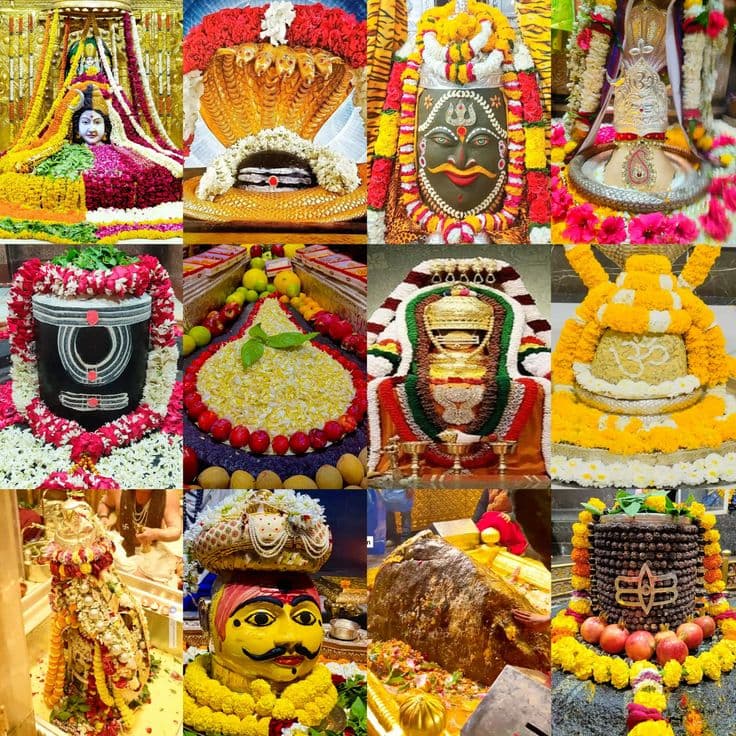




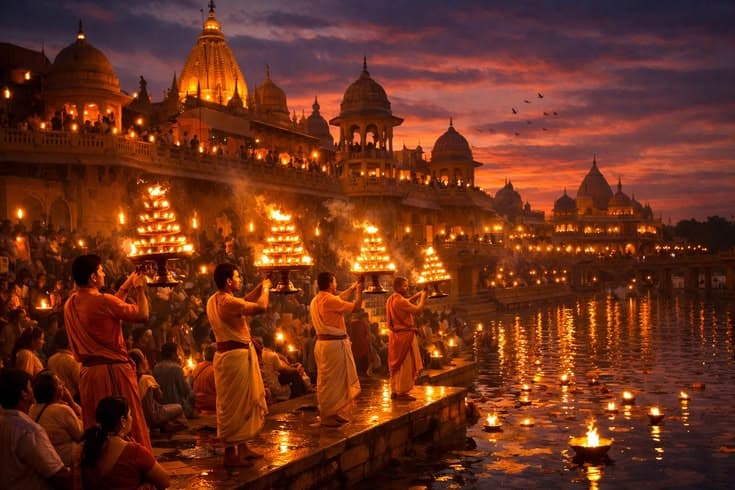


Twelve verses. Twelve sites. One pillar of light. The Shiva Purana hymn called the Dwadasha Jyotirlinga Stotra — attributed to Adi Shankaracharya — names the twelve places where Shiva is said to have erupted from the earth as a column of fire. Children learn it before they can read; pilgrims recite it on Maha Shivaratri. To walk the full circuit is the highest yatra in the Shaiva tradition. The route crosses eight states, climbs to 3,583 metres at Kedarnath, and ends at India's southern tip where Rama is said to have shaped a Shivalinga from sand before crossing to Lanka.
The canonical twelve
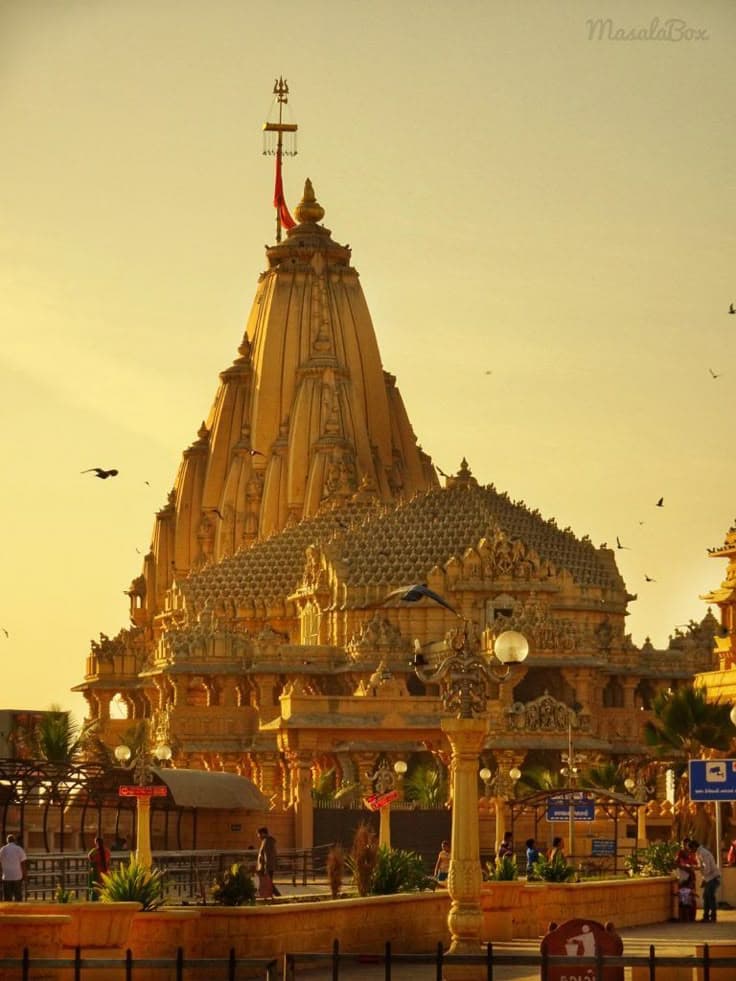
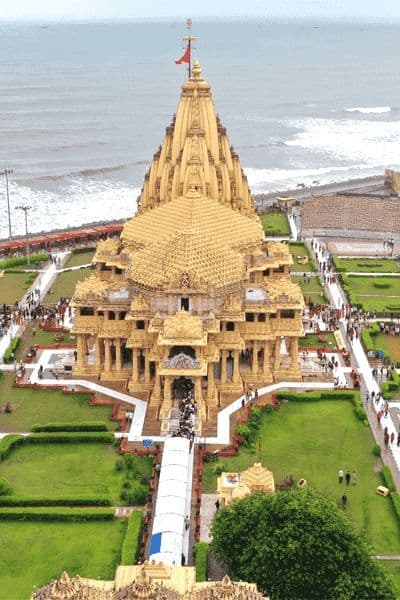
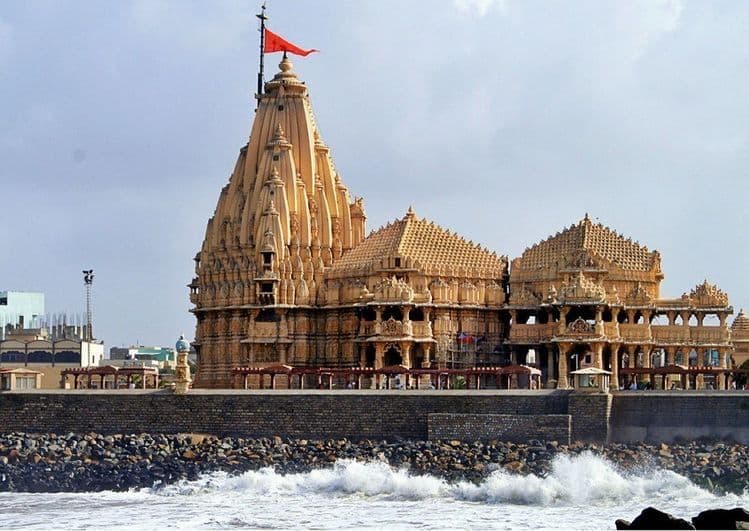
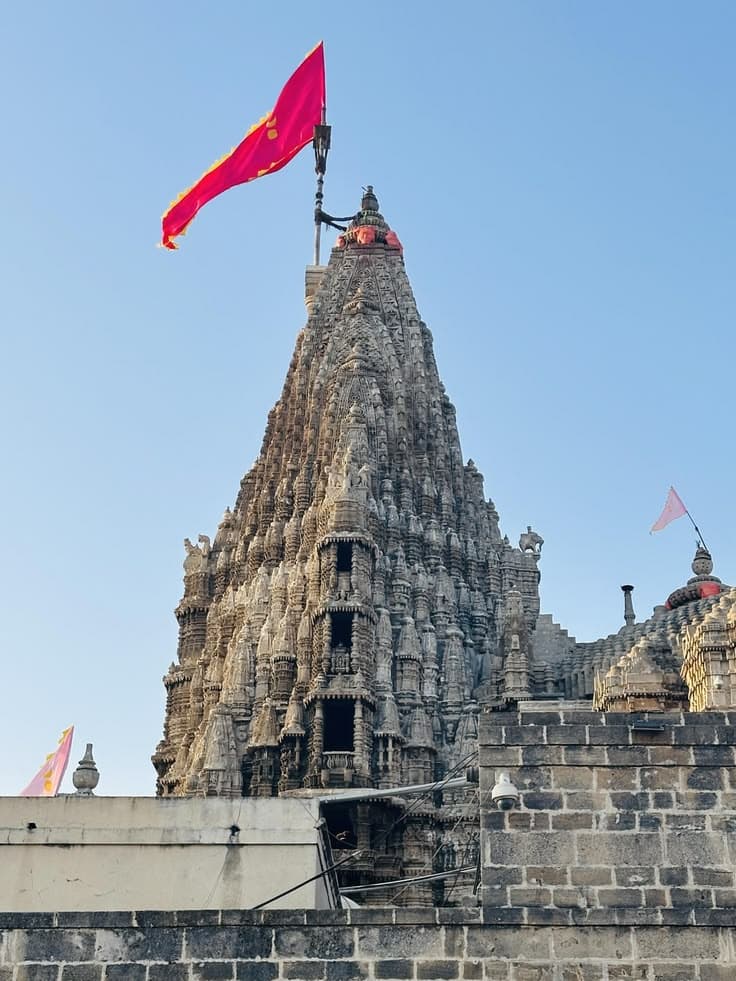
- Somnath, Gujarat — the first; destroyed six times since 1024 CE, rebuilt seven.
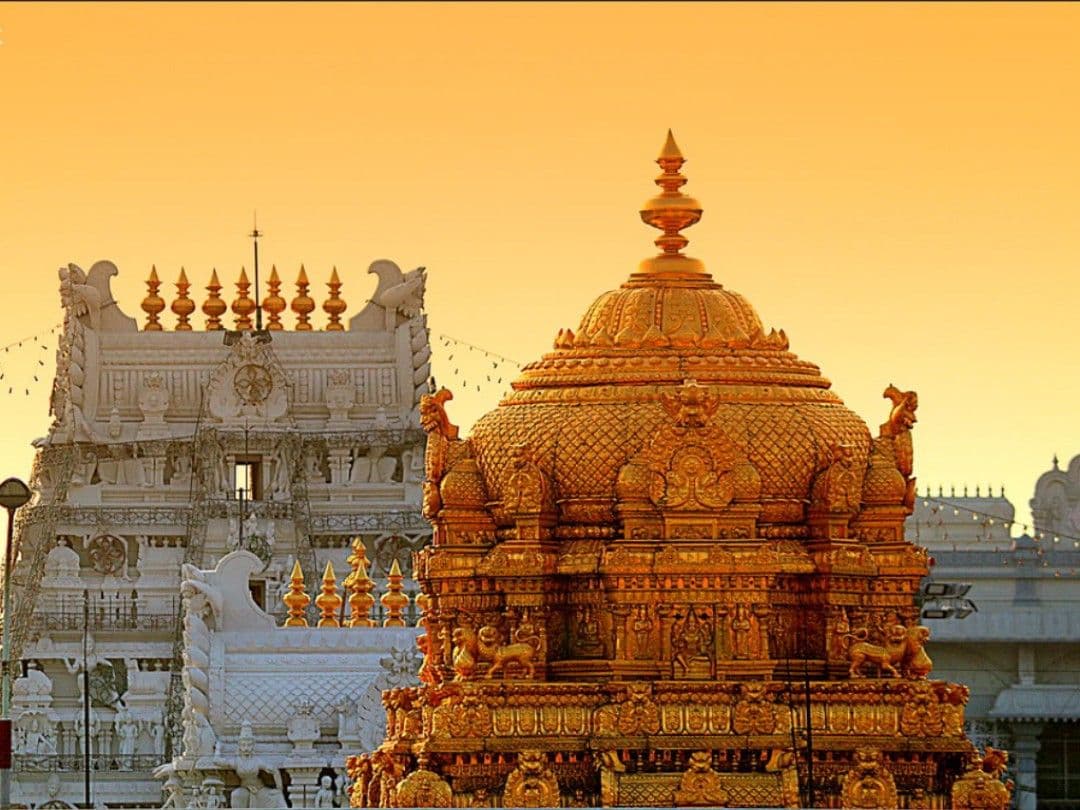
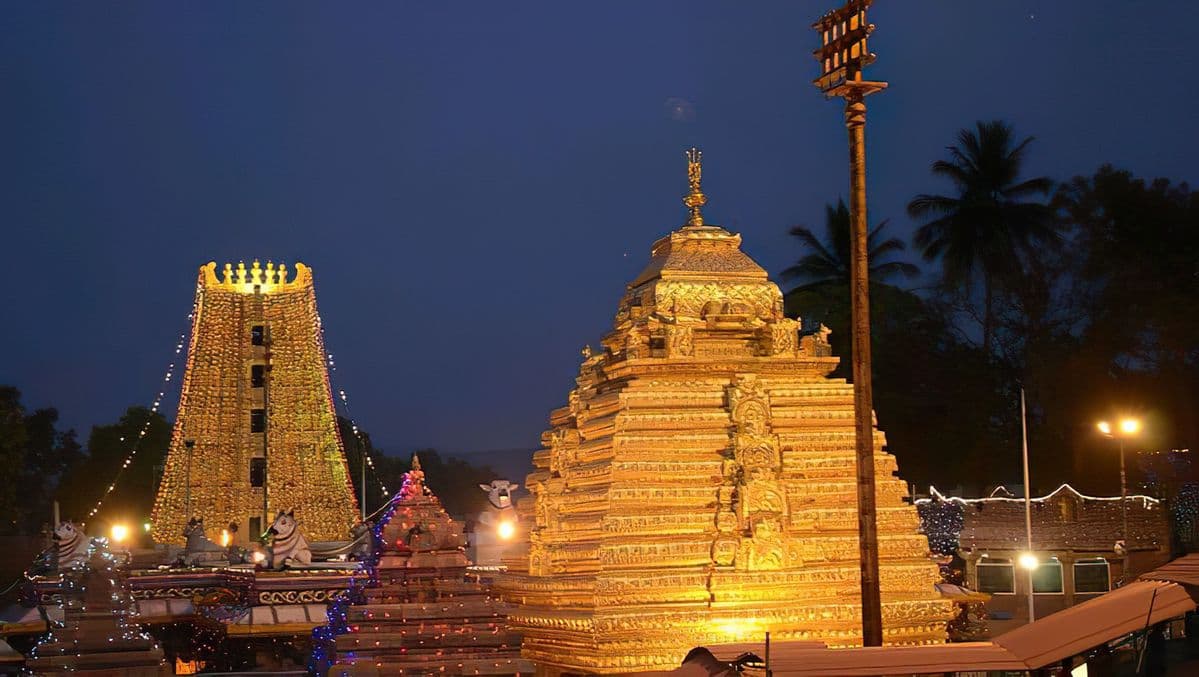
- Mallikarjuna at Srisailam, Andhra Pradesh — the only site that is also a Shakti Peetha.
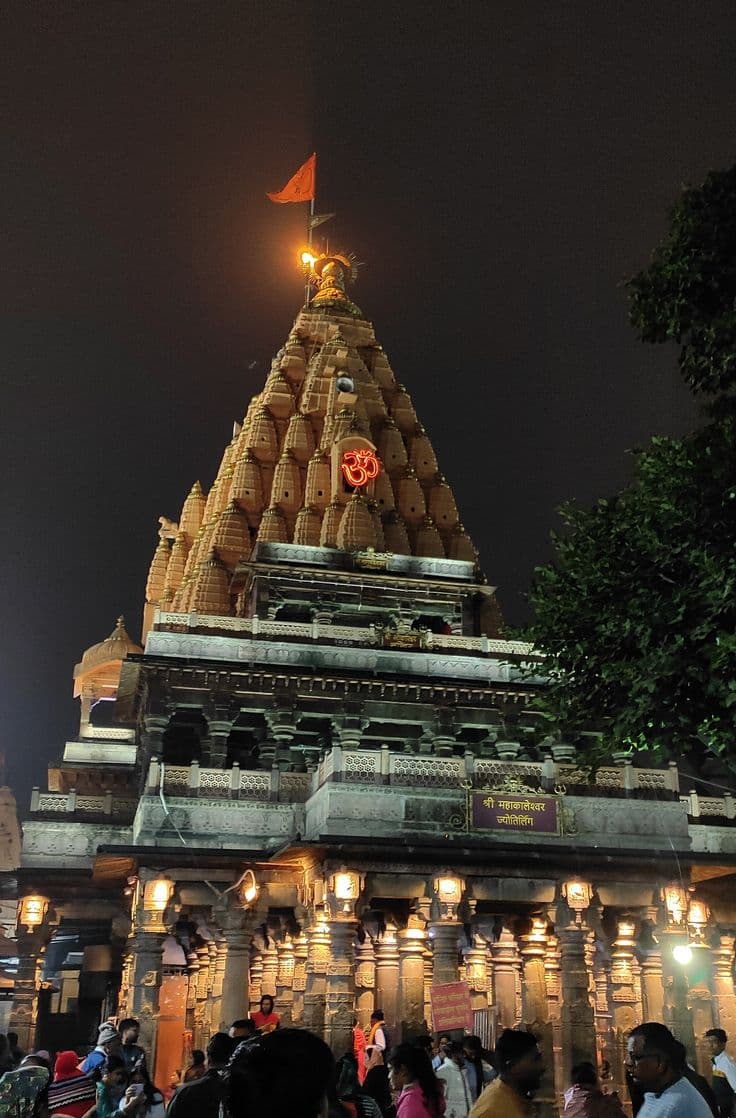
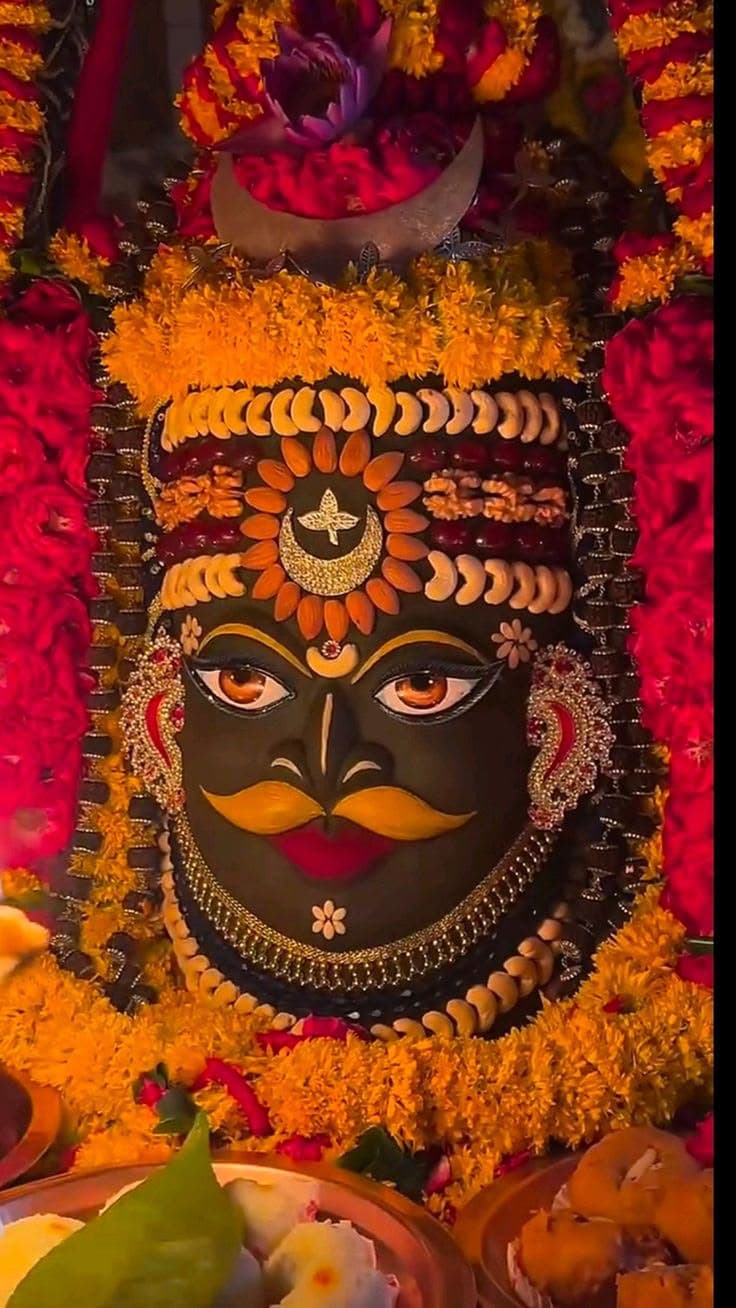
- Mahakaleshwar at Ujjain, Madhya Pradesh — the only south-facing Jyotirlinga; the 4 a.m. Bhasma Aarti anoints the linga with cremation ash.
- Omkareshwar, Madhya Pradesh — on Mandhata island, the island itself shaped like the syllable Om.
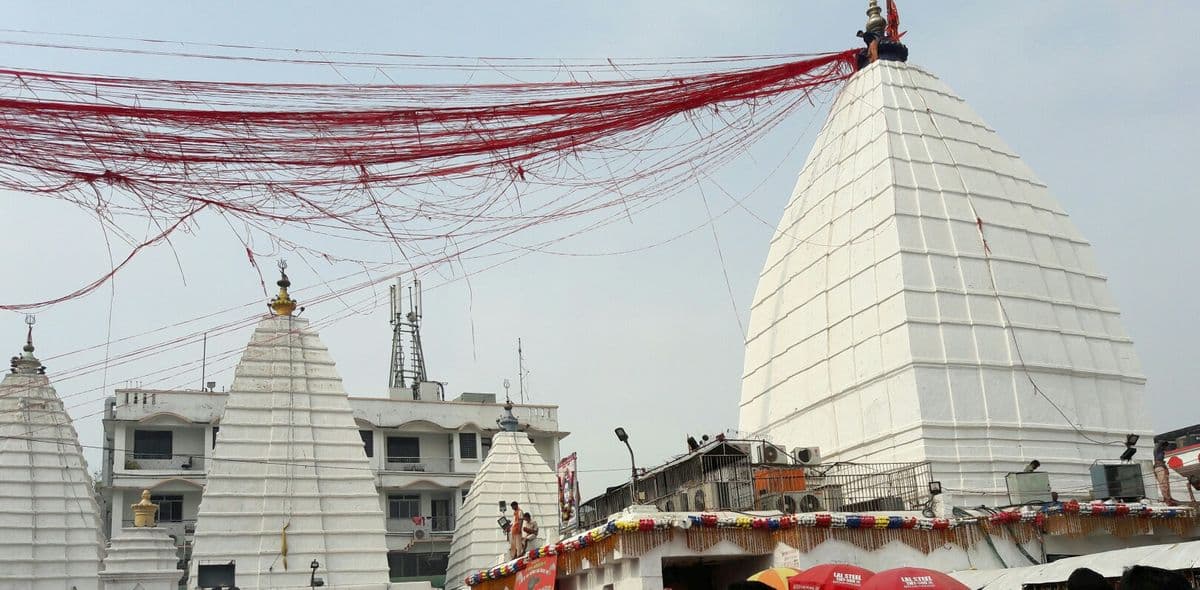
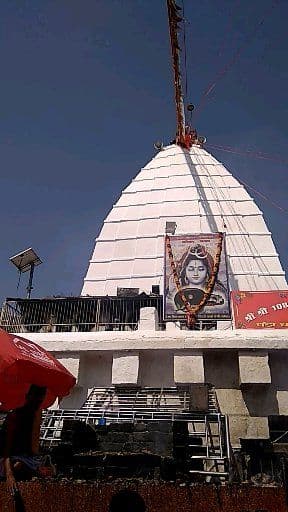
- Baidyanath, Jharkhand — the 'physician of the gods'; pilgrims walk 108 km barefoot from Sultanganj during Shravani Mela.
- Bhimashankar, Maharashtra — set inside a wildlife sanctuary protecting the giant Indian squirrel.
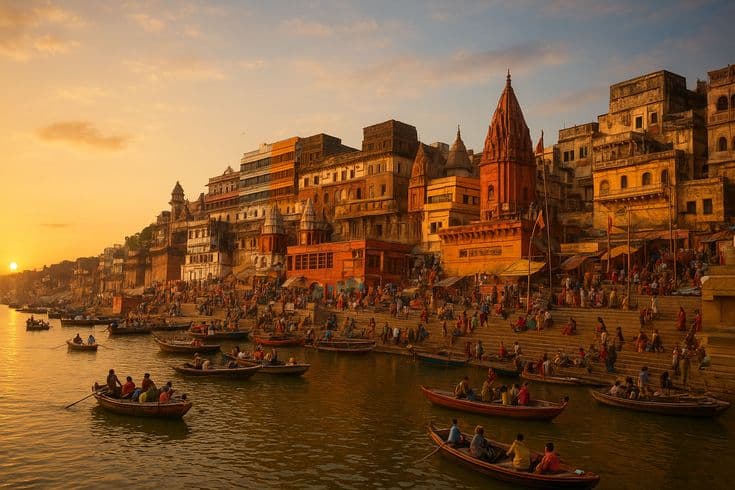
- Kashi Vishwanath, Uttar Pradesh — the supreme Jyotirlinga; moksha to anyone who dies in Kashi.
- Trimbakeshwar, Maharashtra — source of the Godavari; the only three-faced linga.
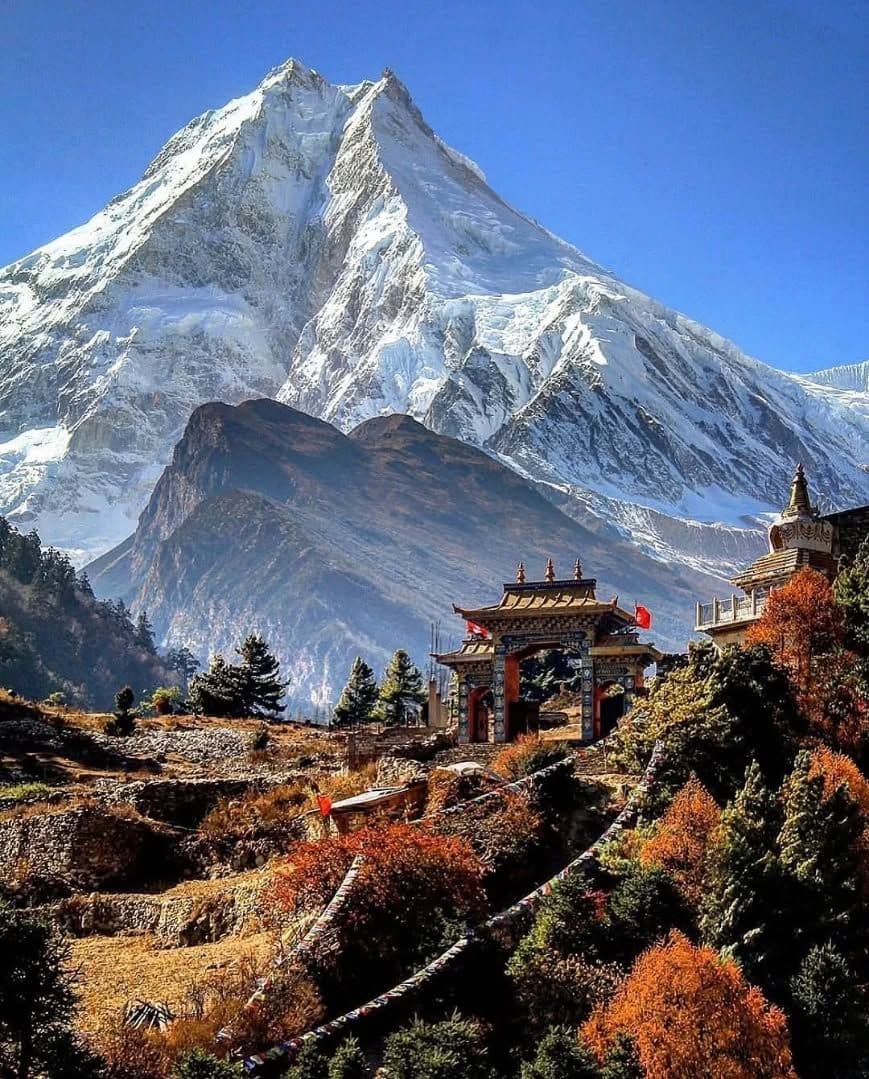
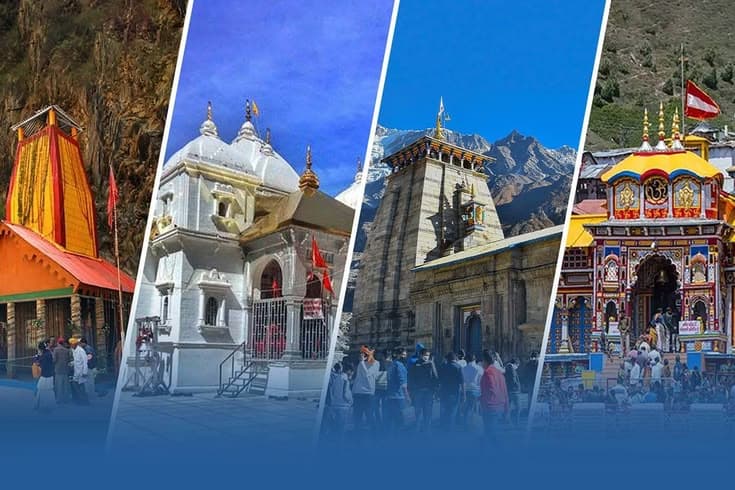
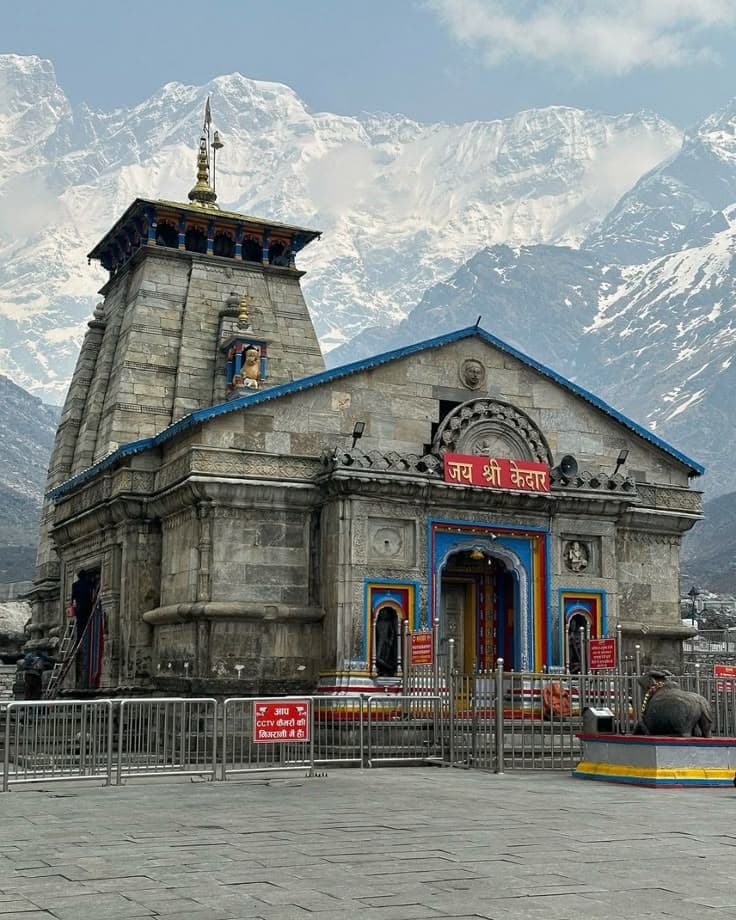
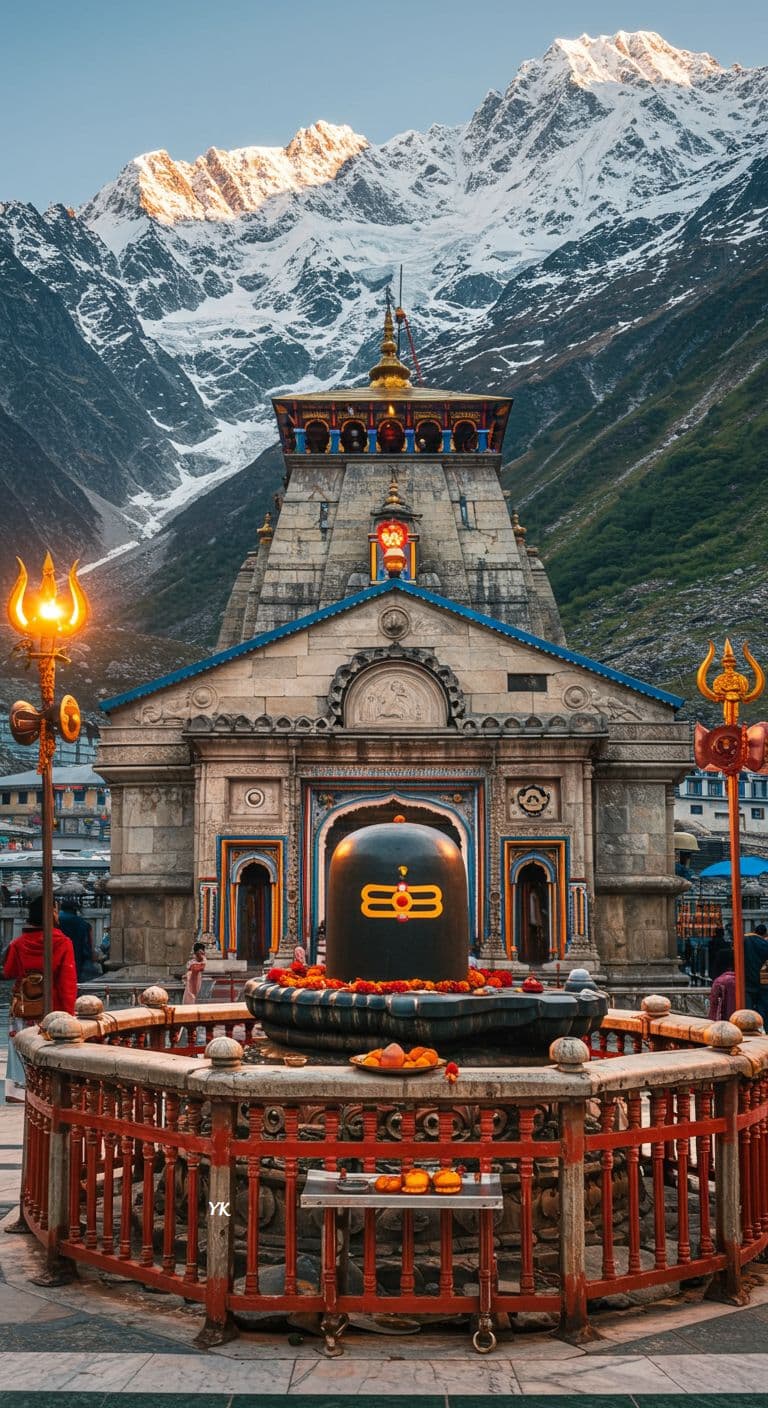
- Kedarnath, Uttarakhand — the Himalayan dhām, open May-October only.
- Nageshwar, Gujarat — 17 km from Dwarka, beneath a 25-m statue of Shiva.
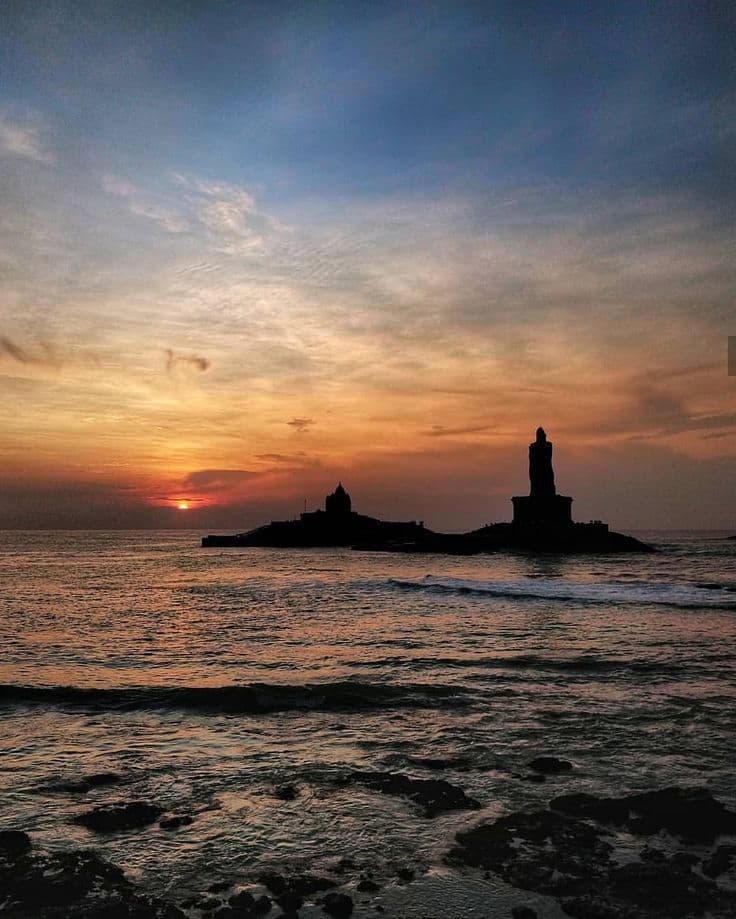
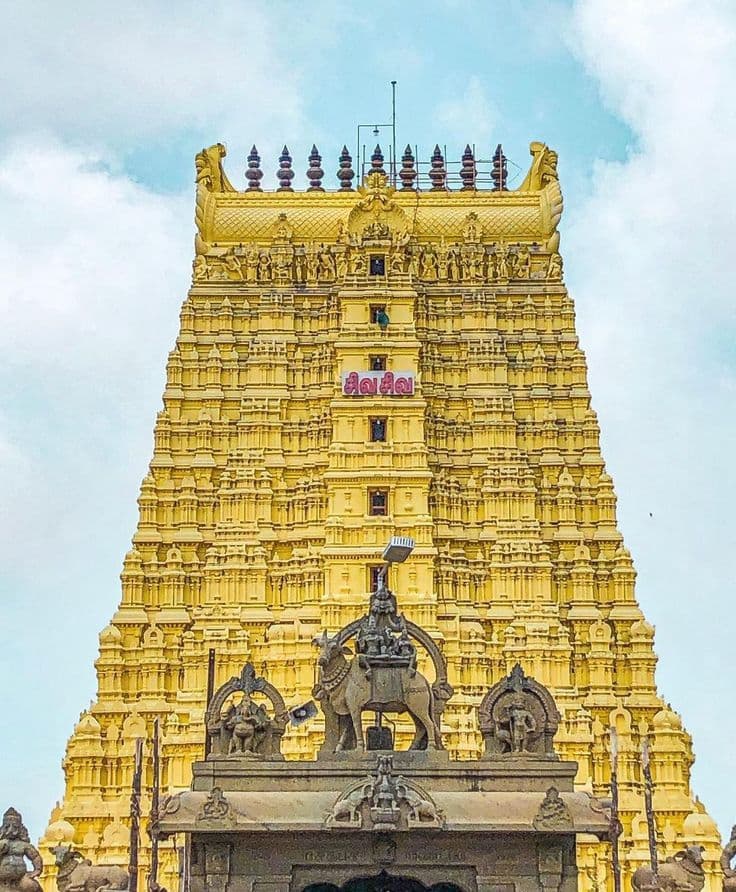
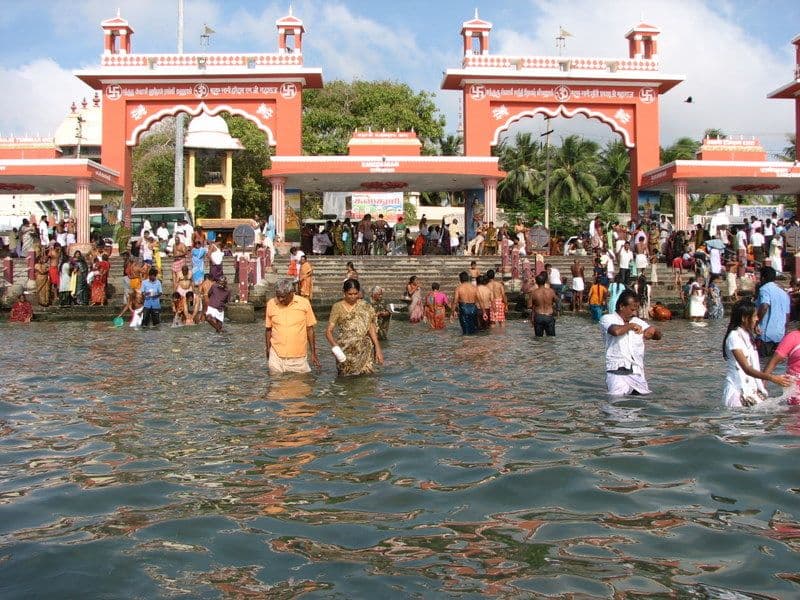
- Ramanathaswamy at Rameswaram, Tamil Nadu — where Rama worshipped Shiva before crossing to Lanka.
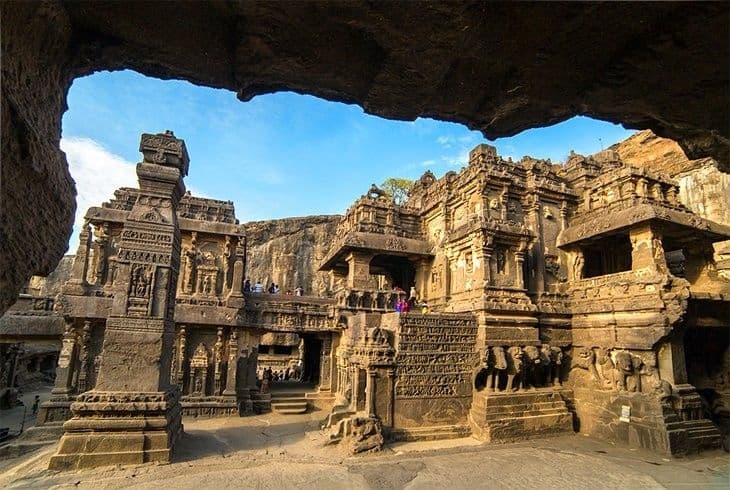
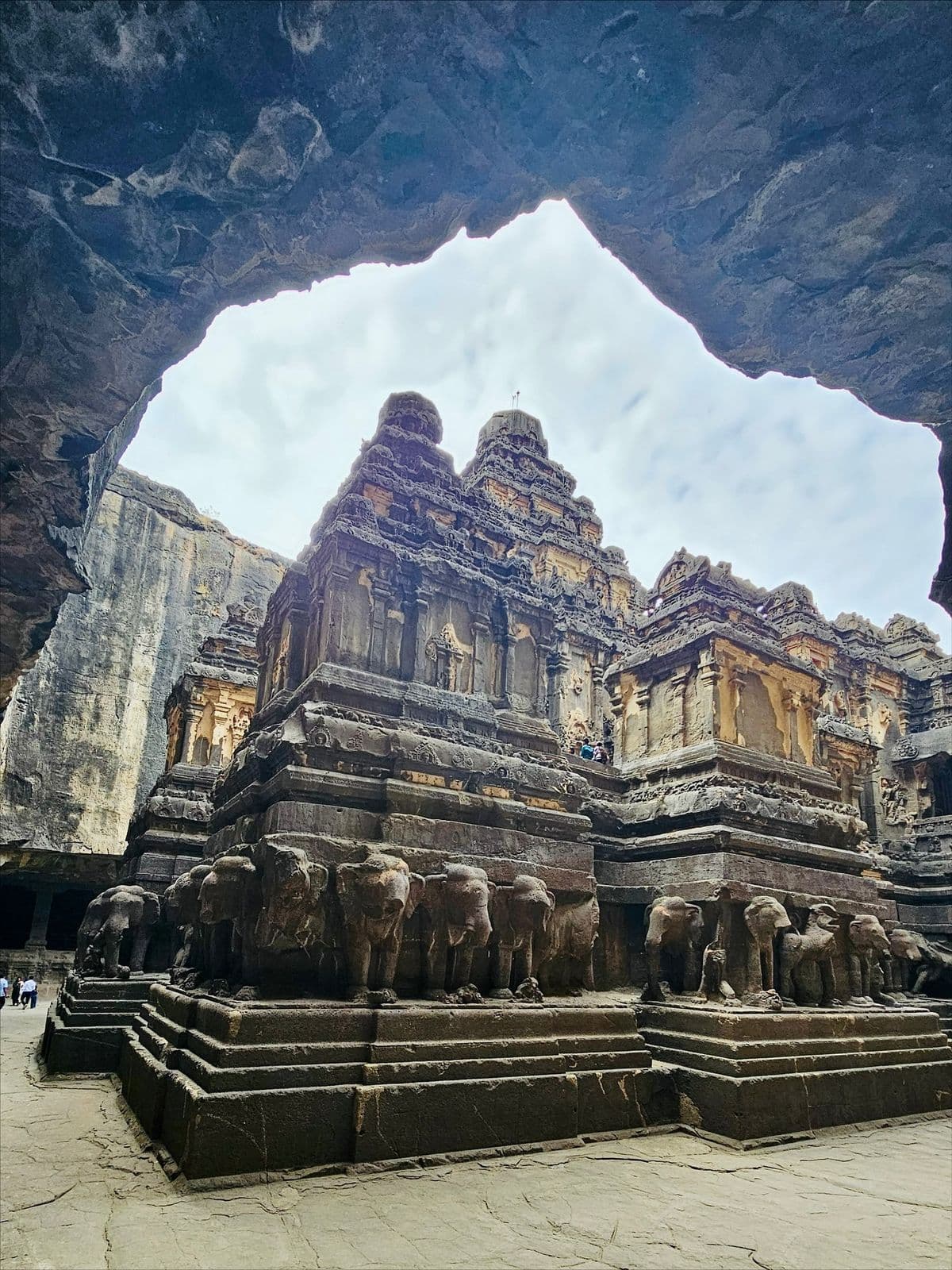
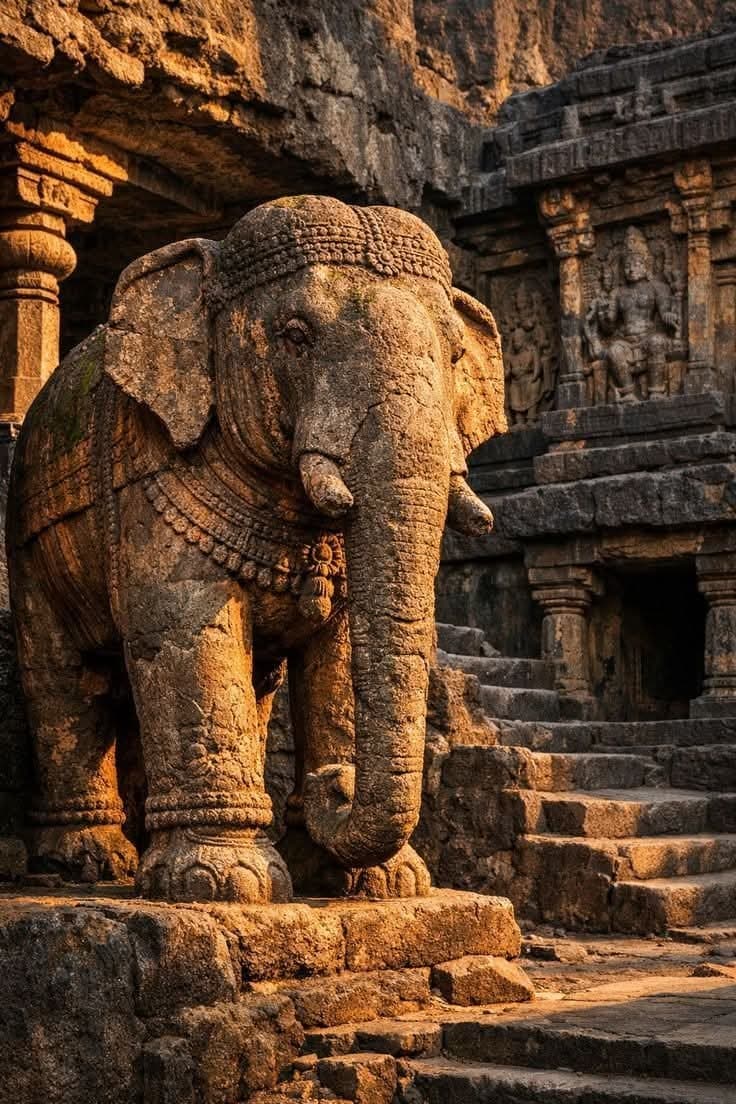
- Grishneshwar at Ellora, Maharashtra — the smallest and last; right beside the Kailasa rock-cut temple.
Three new entries you might not know
If you've grown up with Hindi household discussion of the Jyotirlingas, you'll know Somnath, Mahakaleshwar, Kashi and Kedarnath by heart. The three less-known stops, all in central India, deserve their own paragraph. Omkareshwar sits on a small island where the Kaveri tributary meets the Narmada. The 7 km island parikrama, best done at dawn, takes you past the 24 Avatars temples, the Adi Shankara cave (where the saint met his guru), and the new 108-foot Statue of Oneness unveiled in 2023. Bhimashankar is a 4-hour drive from Pune through Sahyadri evergreen forest — pilgrims and birdwatchers share the same trail, scanning the canopy for the giant Indian squirrel (Maharashtra's state animal). Trimbakeshwar is the source of the Godavari — every 12 years, the Simhastha Kumbh Mela brings 10-20 million pilgrims to bathe at the river's headwaters; the next is in 2027.
Three regional sub-circuits
Twenty-one days is too long for most working pilgrims. Three sub-circuits compress the canonical twelve into manageable chunks: the South (Mallikarjuna and Rameswaram, ~7 days), the West-Central (Somnath, Nageshwar, Mahakaleshwar, Omkareshwar, Trimbakeshwar, Bhimashankar and Grishneshwar — seven of the twelve in 12 days), and the North-East (Kashi Vishwanath, Baidyanath, Kedarnath, ~10 days). IRCTC's Bharat Gaurav Jyotirlinga Yatra trains run rail packages from ₹50,000 per person covering each sub-circuit. The Mahakaleshwar Bhasma Aarti, in particular, must be booked 30 days ahead — only 200 slots/day, and they fill within hours.
Two paired Devi shrines you'll meet on the way
Two of the twelve Jyotirlingas share their compound with a Shakti Peetha — Srisailam (with Bhramaramba Devi) and Ujjain (with Harsiddhi Mata). Visiting these counts as a double pilgrimage in the Smarta tradition — Shiva and Shakti at one address. Plan an extra day at each so you have time for both shrines and the supporting rituals (Mahakaleshwar's Bhasma Aarti, Srisailam's pre-dawn Mukha Darshan).
“Lingam achalam, jnanam achalam — the linga does not move; knowledge does not move.”

About the author
Devansh MehtaFood · City
Mumbai-based food and cities writer who treats every neighbourhood as an eating route, mapping Indian metros one street stall at a time.
More from Devansh MehtaFrequently asked questions
- Is there a single 'right' order to do the twelve?
- The Stotra order (Somnath first, Grishneshwar last) is canonical but few modern pilgrims follow it strictly because it makes no geographic sense. Most operators sequence by sub-circuit. What matters is that the sankalpa (intention) is declared at the start and the same set of sacred clothing is carried through the entire yatra.
- Can foreigners enter all twelve sanctums?
- Eleven, yes. Mahakaleshwar restricts non-Hindus from the inner Garbhagriha but welcomes them to the courtyard for darshan. Trimbakeshwar formally restricts non-Hindus from the inner sanctum but enforcement is inconsistent. The other ten are open to all — modest dress required at every site.
- What is the Bhasma Aarti at Mahakaleshwar?
- A 4 a.m. ritual in which the Mahakaleshwar linga is anointed with cremation ash — a practice unique to this Jyotirlinga and a direct reminder that Shiva is the lord of cremation grounds. Only 200 entry slots per day; book on shrimahakaleshwar.com 30 days ahead. Men must wear dhoti, women saree — no stitched garments.
- Which Jyotirlinga is the easiest to combine with non-pilgrimage travel?
- {{strong|Grishneshwar}} — sits 1 km from the {{link|/place/ellora-caves|Ellora caves}}, so the same morning that you visit the smallest Jyotirlinga also gives you the rock-cut Kailasa temple, one of India's greatest non-pilgrimage monuments. Aurangabad / Daulatabad are nearby for further heritage stops.